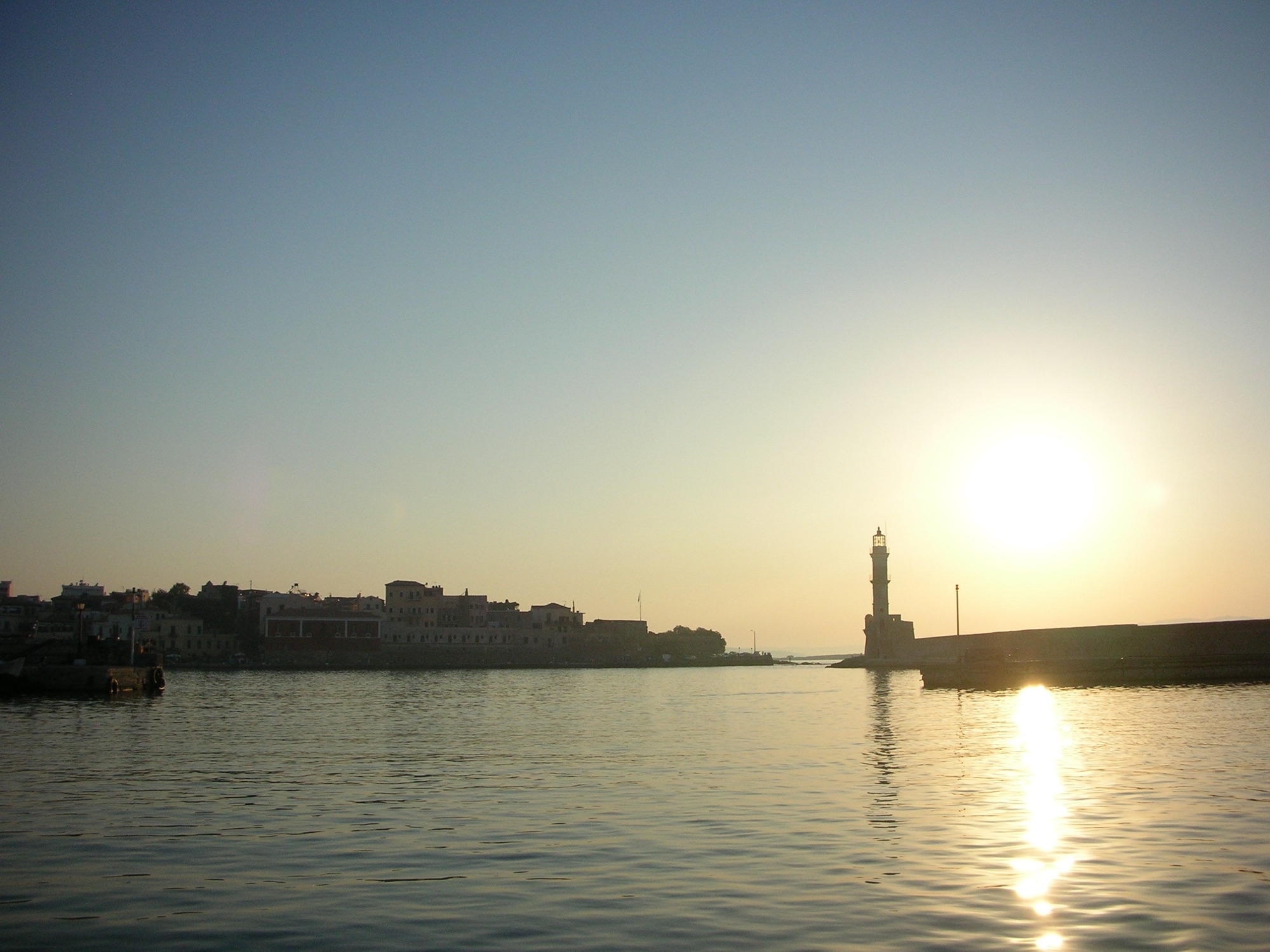
There has always been something about lighthouses that draws me in. Not the postcard version, not the quaint stripe or the dramatic cliff-edge silhouette on tea towels and greetings cards, but something deeper. Something about what they actually do. A light in the dark, solid and dependable, showing the way home. A fixed point that doesn’t chase, doesn’t shout, doesn’t ask anything of you. It just stands and shines, and somehow that feels like enough.
My brother joined the Navy at sixteen. A boy, really, heading out onto the open sea. I found comfort in knowing that the lighthouses of the world were keeping watch over him, marking the edges of things, holding the dark back. You can’t follow someone onto the water. But the light can. And it does, without being asked, without needing thanks. That, I think, is when I first understood what lighthouses were really for.

I’ve thought about why they speak to me so powerfully, and I think part of the answer lies in the stars. My rising sign is Cancer, which means the Moon governs the tides within me. And my Moon rests in Taurus.
Taurus is earth, stone, and weight that doesn’t apologise for its density. It’s not spectacle, nor grand gestures, just steadiness and warmth you can rely on. Its presence doesn’t shift with every change of weather.
Lighthouses are Taurus structures. They are not dramatic. They do not flare and disappear or promise more than they can sustain. They endure. And I think some part of me recognised that long before I had language for it, in childhood friendships, in the people who felt like exhale rather than effort, in every place I’ve returned to and found unchanged.
Their entire purpose is to say: I am here, and I will lead you home. Everything I aspire to, really, in one beautiful structure.
I’ve been lucky enough to encounter lighthouses on travels near and far, and it struck me recently just how many have found their way into some of my most vivid memories. So here, in no particular order, are the ones that have stayed with me…
Pendeen Watch & Godrevy, Cornwall
One of my earliest memories of real awe: standing near Pendeen Lighthouse as a child. Summer holidays in Cornwall, Atlantic wind strong enough to rearrange your thoughts, granite cliffs that felt ancient even then. For our family, Cornwall was also St Ives, long golden days, salt on skin, sand in car boots, and across the sweep of the bay, Godrevy standing white and unmistakable in the distance.

We spent several summers there, and Godrevy became part of the background of freedom and escape. I didn’t have the language for it at the time, but I think that was the first place I understood that some things are just there in the best possible way, solid, reliable, asking nothing of you while somehow giving you everything. Virginia Woolf understood it too. It was Godrevy that inspired To the Lighthouse, that strange and luminous novel about longing and time and the things we reach toward. Standing on the shore as a child, I had no idea. Now it feels entirely right.

Years later I returned, to The Lizard, to Cape Cornwall, back to St Ives, sometimes in company, sometimes with my dear friend Mary. We walked those beaches as women, not girls, and the conversations were deeper and the laughter carried history. Godrevy was still there, exactly as we’d left it. There is something so grounding about revisiting a landscape that once held your younger self.
Mary died from ovarian cancer in the prime of her life. Afterwards, Cornwall felt different, not diminished, just layered. More memory in the light somehow. But the lighthouse still does what it always has. It turns. It keeps watch. And there’s a real comfort in that.
Holyhead, Howth & Hook Head: The Irish Thread
Some lighthouses mark geography. These three mark something more personal, a whole strand of my life running from childhood to now, stitched together by the Irish Sea and the people I love on the other side of it.
Holyhead Breakwater was where Ireland began for me. The ferry crossing to the Motherland, the Irish Sea often restless beneath us, that last flash of light behind us as we headed out. I always watched it go. Even as a child I understood there was something ceremonial about leaving a shore.
Howth Lighthouse I have never visited on foot, but I know it intimately. Every time I fly into Dublin it catches my eye, standing at the head of the peninsula, looking out to sea. My grandparents are buried nearby, and there is something quietly consoling about the lighthouse keeping its watch over them. I’ve stood at their grave in the wind with my mother, seen her sadness, the particular grief of a daughter that no amount of time seems to fully settle, and looked out toward that distant light. It does what lighthouses do. It stays. It doesn’t leave them.

Hook Head came later, and carries different weight. We gathered there on the first birthday Mary would have celebrated since her passing, her homeland, her people, the wind whipping around us as if grief itself had weather. Hook Head has stood for nearly eight centuries, one of the oldest working lighthouses in the world, and standing beneath it I felt the full weight of that extraordinary continuity. Our lives are brief. Mary’s was far too brief. But love and light outlast more than we sometimes dare to hope. Marking her birthday at that ancient tower felt absolutely right, not a closing, but a keeping.
The Norwegian Coast: From the Air and the Ground
My first encounter with Norway was from the air. Flying from Stavanger to Bergen, the coastline unfolded beneath me, fjords cutting deep into the land, islands scattered like punctuation, and lighthouse after lighthouse passing below. It was a short flight. There were so many. I lost count and gave up counting and just watched them go, one after another, quiet sentinels in a landscape that seemed to have been made with patience in mind.
The second trip went deeper. A little plane from Oslo set me down at the edge of the mountains, and for eight days Norway opened itself up, valley by valley, fjord by fjord. Loen and its glacier. The wild, hidden road through Norangsdalen, jagged peaks of the Sunnmøre Alps filling every mirror. Then the ferry into Geirangerfjord, where a hush fell over every passenger as we rounded the first bend and didn’t lift until we docked. The Seven Sisters waterfalls thundering with snowmelt. Days that felt almost impossible to believe.

I was based in Ålesund itself for the last few days of my adventure, a town so pretty it barely seems real. Pastel buildings stacked along the waterfront under skies that seemed permanently, impossibly blue. In the harbour, two tall wooden sailing boats sat moored beside a squat red lighthouse, the whole scene reflected in water so still it looked painted.

A cat adopted me that morning, following me through the harbour and settling beside me on the wall while I sat awhile and watched the world. Some companionship arrives without explanation and asks for nothing. I didn’t mind that at all.

And then, on the last day, Alnes.
After all that grandeur, Alnes Lighthouse arrived like a quiet exhale. The road through the undersea tunnel, the island opening out, the old wooden structure standing at the tip of Godøya looking out to an uninterrupted sea. Norwegian light doing what it does, not blazing but glowing, long and golden and reluctant to leave.

I climbed to the top, the final steps without a handrail, and stood in the salt air as the breeze moved through everything. Below, the lighthouse hid further treasures: homemade cakes lined up in a little cafe, a lingonberry cheesecake I still think about, an unsupervised honesty shop selling handmade things. I spent a couple of hours just being there, peeping through the cosy lighthouse windows out to sea.

It was also where I found my hand-knitted Norwegian wool hat, purple, inevitably, which has become so synonymous with me that friends now recognise it before they recognise my face.
Alnes was the last thing Norway gave me before I flew home. It felt like a benediction.
The Pacific Coast, California
California was not one lighthouse, but a procession of them.

A road trip from San Francisco to San Diego, the Pacific unspooling beside me like a ribbon of restless blue. In Santa Cruz, Walton Lighthouse stands watching surfers rise and fall with the swell, patient as ever. At Point Sur, the lighthouse sits atop a volcanic rock rising straight from the beach, so dramatic it looks invented.

Further south the coastline softens into Mediterranean light, and along the sweep of Los Angeles, from Malibu cliffs to Point Vicente, the beacons feel almost cinematic, suspended between land and dream. Each one distinct. Each one constant.
Driving that coast I realised something: you do not need only one fixed point to feel guided. Sometimes steadiness appears in intervals, light after light after light, spaced along the journey.
Australia’s East Coast
Road-tripping from Sydney to Brisbane, the climb up to Barrenjoey Lighthouse at the tip of Palm Beach felt like an initiation, ocean pressing in on both sides, the most spectacular views waiting at the top.

A freak storm caught us at Cape Byron at sunset, dramatic doesn’t even cover it, but the next morning dawned in brilliant sunshine. Cape Byron sits at Australia’s most easterly point, the very edge of a massive landmass, and there’s something about standing there that makes you feel both very small and strangely free. Weather passes. Light returns. I’ve always loved that about lighthouses.


The Channel Coast
La Corbière in Jersey sits out on its rocks like it has always been there and always will be, the causeway that connects it to shore swallowed by the tide twice a day. There is something about a lighthouse you can only reach at certain hours. It reminds you that access to some things has to be earned, or simply waited for.Two chalk landmarks, not far from each other in the scheme of things, both familiar in the way only childhood coastlines can be.

The Needles off the Isle of Wight mark a threshold between land and open water, those white stacks and their lighthouse standing at the western tip of the island like a full stop at the end of a sentence. There is something about catching that last flash of light as you head out to sea. A reminder that there is a way back. You are not unmoored.
Old Harry Rocks is just along the coast from where I grew up, and a place I return to again and again. The sea changes colour every time, grey-green to the most improbable turquoise, depending on the season and the mood of the sky. At nearby Anvil Point, the light still turns. Some places just get under your skin.
I’ve been thinking about why lighthouses have always meant so much to me, and I think it comes down to this: in a world that rewards noise and speed and constant movement, there is something profoundly reassuring about a presence that simply holds its ground. They don’t run toward the ships. They stand, and shine, and trust that those who need to find their way will do so.

I’ve felt that reassurance on Cornish cliffs, on Irish headlands, at the edges of the world, and in the memory of the people who once walked beside me and still somehow do. A quiet beam turning in the dark. Not asking to be followed. Not needing to be named. Just shining.
And honestly? At moments like this, it feels so darned great to be alive.
For Mary.

Leave a Reply